Watch Strap Stitching Types: Classic, Box, Double or None
The main watch strap stitching types are classic (a single row down both sides), box (the row also crosses the lug end), classic double (two parallel rows), lug stitch only (short stitches at the ends) and stitchless. Classic suits almost any watch; box and double look sportier; lug-only and stitchless look clean and vintage.
What are the five watch strap stitching types?
Stitching on a leather watch strap does two jobs. It holds the top leather to the lining, and it draws a line that changes how the strap looks from across a room. The pattern of that line is what people mean by stitching type. In the XILUGS builder you choose one of five:
- Classic stitches: one row down each side and around the tip, open at the lug end.
- Box stitches: the same row, closed across the lug end so it frames the strap.
- Classic double stitches: two parallel rows down each side.
- Precise to the lugs: short stitches at the lug and buckle ends only.
- No stitches (vintage style): a plain strap with no visible thread.

Every stitched style is sewn by hand. Box stitching adds $5 in the builder; the other four styles cost nothing extra, so the choice comes down to looks.
Classic stitching: the safe default
Classic stitching is the familiar outline: one row of stitches along each side, turning around the pointed tip. It is the most popular choice in our builder, and it suits dress, field and sports watches alike because it outlines the strap without adding a second visual element.
The color of the thread does the real work here. A matching thread disappears and lets the leather speak; a contrast thread turns the outline into a design feature.

Classic stitching also ages well. As the leather darkens or softens, the outline stays crisp and keeps the strap looking finished, even after years of daily wear.
If you are unsure, start here. Classic stitching works with every leather we cut, from Epsom calfskin to alligator, and it never looks out of date. Still deciding on the material itself? Our guide to watch strap leather types compares calf, ostrich and alligator.
Box and double stitching: bolder options
Both of these add thread where classic stitching leaves leather bare, so they make the strap look stronger and more technical. They suit bigger, sportier watches better than slim dress pieces.
Box stitching: a framed look
Box stitching closes the line across the lug end, so the stitches form a frame around the top of each half. On a wide strap the frame squares off the look, which suits a large watch with chunky lugs.

On a slim 18 mm dress strap the closed end can look busy, so classic or lug-only stitching is usually the better fit there. Box stitching pairs best with matte, rugged leathers such as waxed cowhide.
Classic double stitching: two rows
Classic double stitching runs two parallel rows down each side. The second row doubles the amount of thread on show, so the strap reads bolder and more technical. It looks most at home on padded straps and racing or rally designs, where a strong outline matches the character of the watch.

Double stitching needs room. It works best from about 20 mm upward, where both rows can sit side by side without crowding the edge.
Lug stitch only or no stitching
The quietest options remove most or all of the visible thread. Precise to the lugs keeps only short stitches at the lug end and above the buckle, which gives a hint of craft without an outline. Stitchless, which we call vintage style, leaves the top leather completely plain.

Both suit vintage watches and minimalist dials, and both put the leather itself in front. They also leave the edge as the only line around the strap, so a contrast edge color has a bigger effect. Our guide to choosing an edge color shows how that plays out.
How is each strap stitched by hand?
Every stitched style above is a saddle stitch, worked by hand at step 10 of our 18 steps. The holes are first struck with a pricking iron held at one constant angle, which gives a hand seam its slight slant. Then two needles work a single waxed thread from both sides, crossing inside every hole.

Stitching takes about an hour per strap, and because the thread crosses in every hole, one cut stitch does not unravel the seam. You can see each stage, from cutting to quality control, on our crafting process page.
How do you choose a stitch color?
Thread color changes the mood more than the stitching type does. The builder offers 24 thread colors, from black and cream to turquoise and Coke brown, plus options to match the leather or the underlay. A few rules of thumb:
- Match the leather for a formal or dress watch; the stitches read as texture, not color.
- Cream or white on brown or black gives the classic vintage look.
- Pick up a dial color, such as a yellow seconds hand, for a sports or rally watch.
- Repeat the color once more in the edge or keepers so the contrast looks planned.
Think about the season too. Light threads such as cream, white or yellow read as summer and casual; dark threads that match the leather feel more at home with a suit in winter. Because each strap is made to order, nothing stops you owning both.
Keepers can carry the same thread or a different color; our explainer on the two keeper loops covers the options.
Straps to see each style in person
- Honey Waxed Cowhide, Cream Box Stitch, from $69: box stitching on a rugged leather.
- Black Togo Calfskin, Double Stitch, from $69: two contrast rows.
- Vintage Forest Green Pueblo, Lug Stitch, from $69: thread at the ends only.
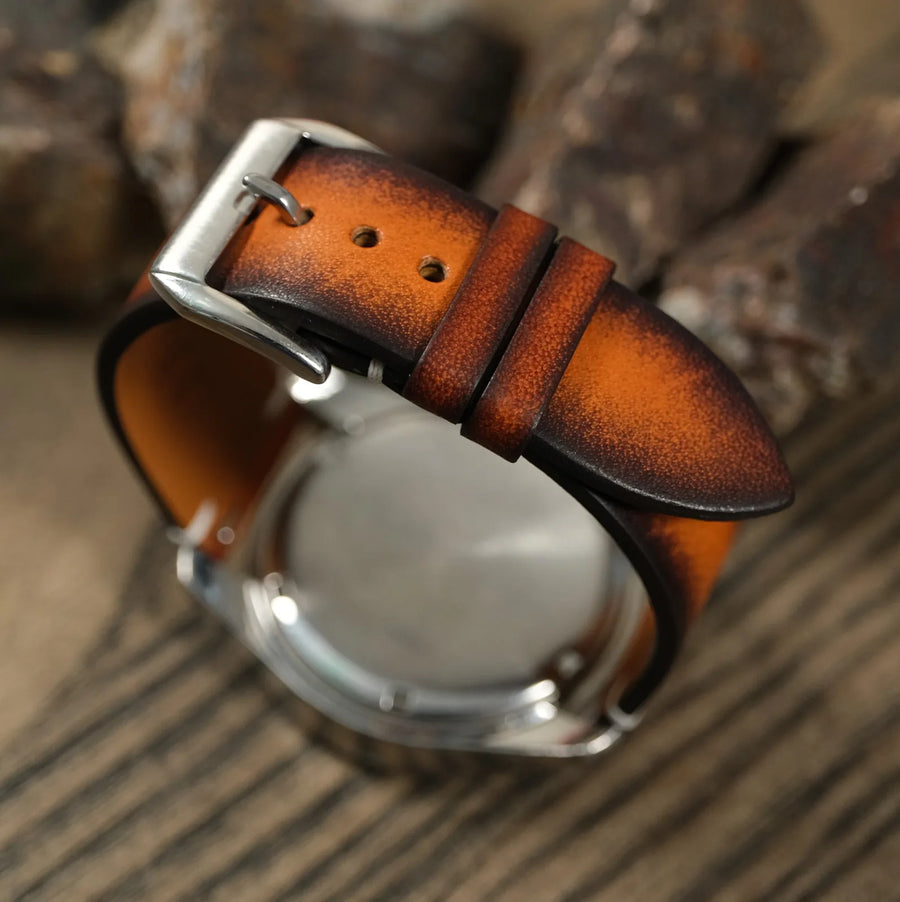
- Burnt Orange Patina, Yellow Stitch, from $69: classic stitching in contrast.
To combine any stitching type with any leather and thread color, use the design-your-own strap builder, which shows your choice in a live preview before anything is cut. You can also browse rally watch straps for bold double rows or regular leather watch straps by material.
FAQ
What is the most popular watch strap stitching?
Classic stitching, a single row down both sides and around the tip, is the most chosen style in our builder. It suits almost any watch and any leather, and it costs nothing extra.
What happens if one stitch breaks?
On a hand saddle stitch, the thread crosses inside every hole from both sides, so a single cut stitch does not let the rest of the seam run. If it happens, email a photo to support@xilugs.com so we can take a look.
Does box stitching cost more?
Yes, box stitching adds $5 in the XILUGS builder. Classic, double, lug-only and stitchless styles cost nothing extra, and every stitched style is sewn by hand.
Which stitching suits a dress watch?
Classic stitching in a thread that matches the leather is the safest choice for a dress watch. Lug-only stitching is a cleaner alternative on a slim case, while box and double rows usually look too sporty.
Can I have no stitching at all?
Yes. Choose "No Stitches (Vintage Style)" in the builder for a plain top surface. The strap is still assembled and finished by hand, and the edge becomes its only outline.
Can the stitch color differ from the edge color?
Yes. Stitch, edge, keeper and underlay colors are chosen separately, so you can match some and contrast others. Repeating one contrast color twice usually looks most deliberate.
Whichever stitching you pick, the strap only works if it fits, so check your lug width and wrist on the watch strap size guide before you order.